
An employee opens a filing cabinet to make room and finds old invoices, customer forms and payroll paperwork. Some records still need to be kept. Others may be ready for shredding. Knowing which is which starts with a clear plan for both retention and disposal.
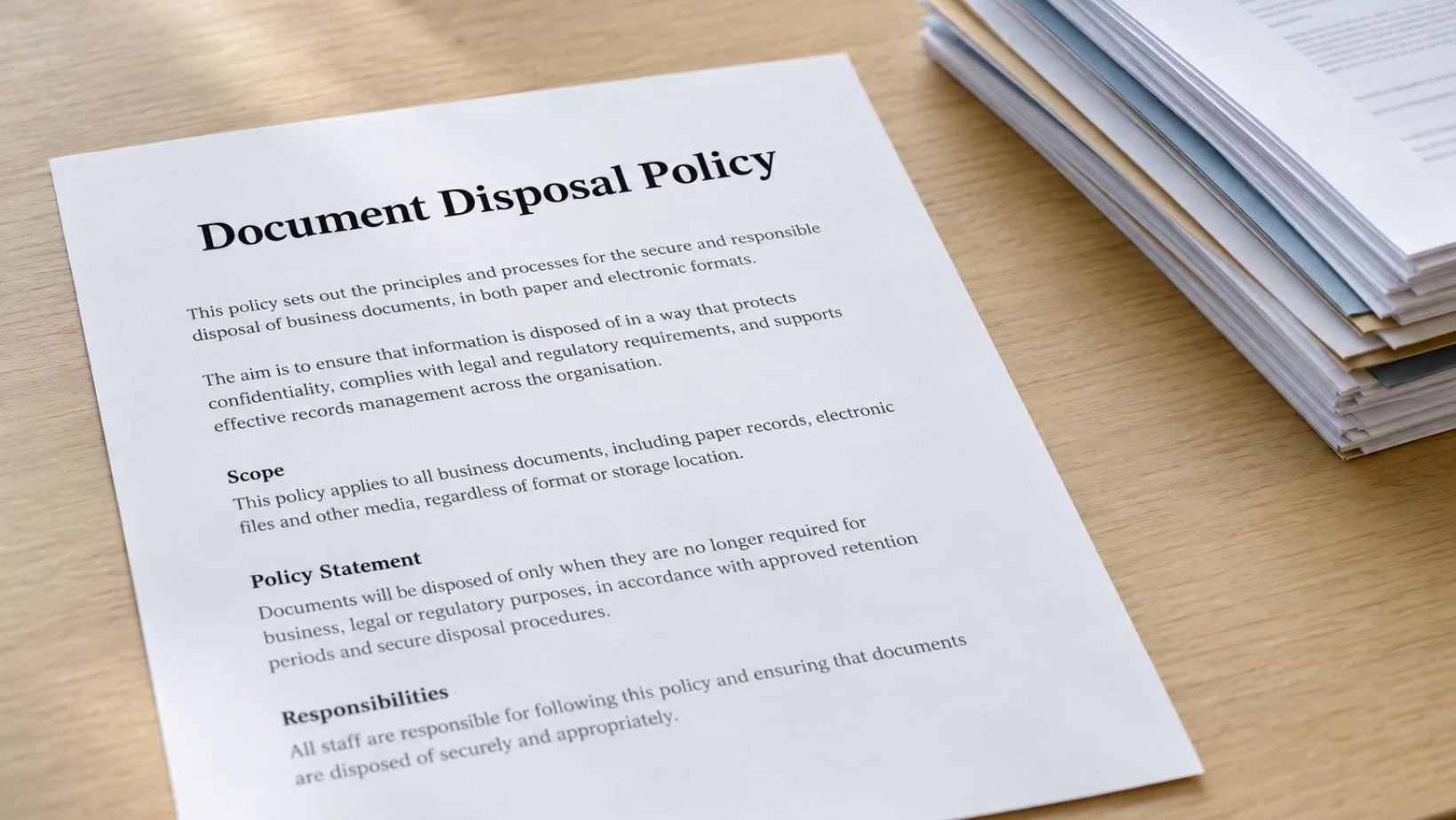
A document retention policy tells your team which records to keep and for how long. A document disposal policy sets out who approves destruction and how those records should be handled and destroyed once they’re eligible. Together, they help employees protect information while it’s needed and dispose of it securely when the time comes.
Identify the Records Your Business Handles
Use your document retention policy as the starting point for identifying records that will eventually need disposal. If you haven’t created one yet, begin by grouping the paperwork your business creates, receives and stores into categories, such as:
- Customer records and correspondence
- Employee and payroll files
- Invoices, receipts and tax documents
- Contracts and supplier agreements
- Internal reports and business plans
Check filing cabinets, storage rooms and desks, along with paperwork employees use at home. Knowing what you have and where it’s stored helps your team apply retention requirements consistently and locate files when they’re ready for destruction.
Account for working copies, handwritten notes and misprints too. These may need different retention instructions from official business records, but they can still contain sensitive information. Your disposal policy should explain how to handle them once they’re no longer needed and can be destroyed.
Establish When Documents Can Be Destroyed
The retention schedule within your document retention policy should identify how long each record category must be kept and when that period begins. Before approving disposal, use that schedule to check whether the records have reached the end of their required retention period.
Avoid applying one deadline to every file. For example, the IRS explains that retention periods depend on the circumstances, with different requirements for different tax records. Confirm the requirements that apply to your business with your accountant or legal adviser.
Your disposal policy should then explain how eligible records move from review to approved destruction. Include instructions to pause disposal when records must be preserved for litigation, an investigation or another legal requirement, and identify who can authorize disposal to resume.
This gives employees a clear connection between the two policies: check what must be retained, confirm what can be destroyed, then follow the secure disposal process.
Assign Responsibility for Disposal Decisions
Choose someone to maintain the document disposal policy and answer questions. In a small business, this might be the owner, office manager or another designated employee.
Make responsibilities specific. Identify who:
- Reviews stored records against the retention schedule
- Approves files for destruction
- Coordinates shredding appointments
- Keeps disposal documentation
You can establish standing instructions for routine paperwork, such as eligible duplicate printouts, while requiring separate approval for archived files.
Employees should also know what to do when they’re unsure. For example, an old customer file with an unresolved issue should go to the designated reviewer rather than directly into a shredding bin.
Set Rules for Secure Collection and Destruction
Once paperwork is cleared for disposal, it still needs protection until destruction is complete.
Use Secure Collection Containers
Direct employees to designated locking bins or consoles for confidential paperwork ready for shredding. Place containers where staff can reach them conveniently, while limiting unauthorized access.
Include instructions for reporting a full container. Employees need an alternative secure location if a bin reaches capacity, rather than leaving documents beside it.
Keep records awaiting a disposal decision separate. A shredding container should hold paperwork that has already been cleared for destruction.
Specify the Destruction Method
State how confidential paper records will be destroyed and who will perform the work. If you’re using professional shredding, explain how staff should prepare materials and who coordinates access on service day.
Set separate procedures for hard drives and other storage media. These shouldn’t be mixed into paper collection bins. Before destroying a device, confirm that the information still needed by the business has been preserved and that destruction has been authorized.
Make Scheduled Shredding Part of the Routine
A written policy works better when employees have a reliable way to follow it. Scheduled shredding services help make secure document disposal part of regular office operations.
Choose a service frequency based on how much eligible paperwork your team generates and how quickly secure containers fill. Review that arrangement if staffing or document volume changes.
A larger backlog may need a separate cleanout. After stored records have been reviewed and approved, a one-time purge can clear accumulated files.
Keep Disposal Records and Train Employees
For archived records, maintain a disposal log showing the record categories, approval details, destruction date and service provider. Store related certificates of destruction where authorized staff can retrieve them.
A certificate documents completed destruction. It doesn’t determine whether the records were eligible for disposal, so keep the approval process within your business.
Introduce the policy during onboarding and make it easy to find. Walk employees through common situations, including misprinted paperwork, full collection bins and files they’re unsure about.
Review the process periodically and after changes to your operations. If staff repeatedly ask the same question, update the instructions. The policy should reflect how work actually happens.
Put Your Disposal Plan Into Practice With i shred
Clear instructions help employees make consistent decisions about confidential paperwork. Pair those instructions with secure collection and reliable shredding, and your business has a process it can use throughout the year.
i shred helps businesses across Southeast Louisiana, including Covington, Slidell, Hammond and Metairie, with secure collection containers, scheduled shredding and one-time purges. Documents are destroyed at your location, where you can witness the process and receive a certificate of destruction.
Contact iShred or call (985) 893-2378 to discuss your document volume and arrange shredding services that fit your business.
FAQs About Document Disposal Policies
Does a Small Business Need a Lengthy Policy?
No. It needs enough detail for employees to understand which records are covered, who approves disposal and how to handle paperwork securely. Start with clear instructions and add detail where your operations require it.
Can I Shred Paper Records After Scanning Them?
Scanning alone doesn’t confirm that the originals can be destroyed. Check applicable record-keeping requirements and verify that digital copies are complete, readable, securely stored and accessible before approving disposal.
What Should Employees Do if They Discard a File by Mistake?
They should immediately notify the designated policy contact. Include instructions for reporting accidental disposal, so the business can assess what happened and determine the next steps.